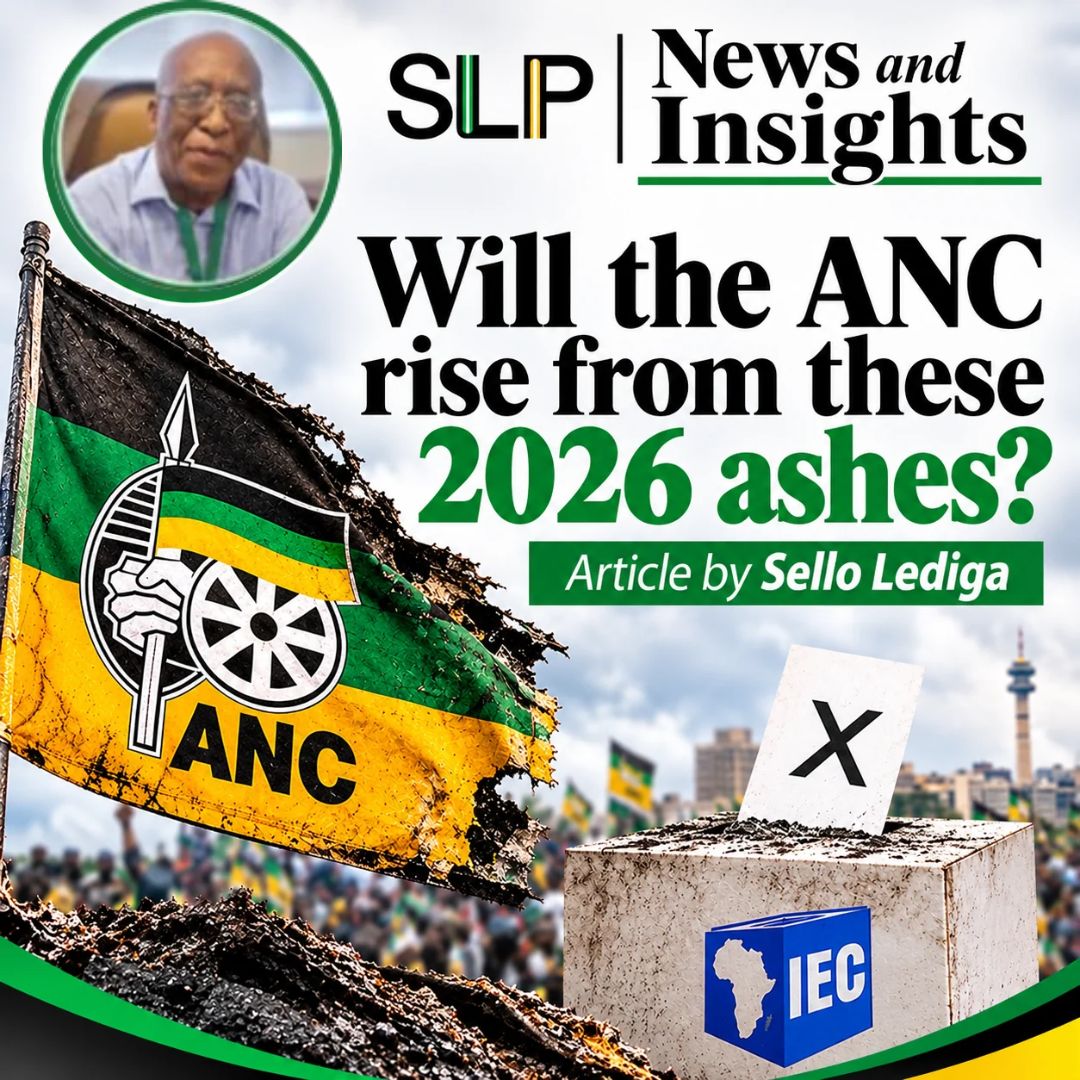
Even before the final 2026 Local Government Elections results were declared, the usually dramatic and straight-talking secretary-general of the African National Congress (ANC), Fikile Mbalula, described his party’s performance as “catastrophic”. By the time the final results were released, it had become evident that the party that had dominated South African politics for more than thirty years had been thoroughly and completely rejected by voters.
To understand the extent of the damage, one has to be reminded that in the 2024 general election, the ANC fell from 57% to 40%, spectacularly dropping by seventeen percentage points. Now, following the local government elections that ended last weekend, the ANC has fallen from 46% to 30%. In just over two years, South Africa’s celebrated liberation movement, the oldest in Africa, has been almost completely rejected by the people it liberated. The African curse of liberation movements that fail their people after liberation was once again playing itself out in Africa’s most sophisticated economy.
The great question of the day is what will happen to the ANC in the 2029 general elections. If the last two elections are anything to go by, the ANC’s performance in 2029 could fall below 20%, as some pundits predict. Even if the ANC were to secure 20% three years from now, it would mean that Oliver Tambo’s party might no longer be in government in 2029 and would have to learn, for the first time, to occupy the opposition benches while other parties take over government, possibly under the leadership of the Democratic Alliance (DA), which has run rampant in LGE ’26.
The future is indeed bleak for Nelson Mandela’s party. Since Thabo Mbeki’s defeat by Jacob Zuma in 2007, the African National Congress has been on a downward slide. During the Zuma years, a pattern of declining voter support culminated in the loss of several metropolitan municipalities in 2016, stunning the political establishment. It is now a historical fact that Cyril Ramaphosa’s presidency has witnessed a spectacular collapse in the electoral support of the so-called “leader of society”. It is no surprise that the billionaire president has, on at least one occasion, threatened to resign. Insiders allege that he has offered to fall on his sword and resign following the 2026 elections.
As the ANC leadership licks its wounds after another devastating loss of electoral support, two parties have every reason to celebrate: the Democratic Alliance (DA) and ActionSA. In the same way that the ANC has spawned political offspring such as the United Democratic Movement (UDM), the Economic Freedom Fighters (EFF) and the uMkhonto weSizwe Party (MKP), the DA gave birth to ActionSA, formed by former DA mayor Herman Mashaba, who, after falling out with DA leader Helen Zille, walked away and established his own political organisation. In the same way that the likes of the EFF and MKP haunt the ANC, ActionSA appears destined to give the DA a rough time. It was during the period when Nasiphi Moya served as deputy mayor to Cilliers Brink that the ANC, EFF and ActionSA launched a political coup that toppled Brink and condemned the DA to the opposition benches.
Now, back to the ANC. South Africa’s leading liberation movement, which negotiated a miraculous political settlement with the apartheid regime and became the darling of the world, is down on its black, green and gold knees. After being in power for thirty years, the party of the people, like most liberation movements, has succumbed to the twin evils of corruption and incompetence. It has turned an otherwise loving electorate into an impoverished and angry lot, which has severely punished the ruling party in two successive elections within a period of two years. The punishment has indeed been brutal.
I wonder what ANC ancestors Oliver Tambo and Nelson Mandela are saying as they witness a “racist” minority party leading in nearly all the metros across the country, while that same party is the only one to have won a metro outright. Meanwhile, the ANC finds itself hamstrung by hostile coalition arrangements, a humiliating experience for a party that dominated South African politics for decades.
I cannot help imagining the possibilities of the 2029 general election. With the ANC having lost voter support by double-digit percentages since 2024, will the people’s movement make a miraculous recovery in 2029 and stop the haemorrhage?
The chances are indeed slim in an environment of stagnant economic growth and escalating unemployment, both of which are condemning millions of South Africans to poverty and indignity. With the ANC accused of presiding over a kleptocratic state in which party bosses become filthy rich at the expense of the masses, a miraculous recovery looks like a mirage. Meanwhile, reports of Cyril Ramaphosa’s possible resignation have been denied by Luthuli House, while the ANC’s upper structures prepare to meet and craft a response that will most likely be ignored by an angry electorate. This time, unlike in 2024, when Ramaphosa called the shots despite a devastating election result, the ANC finds itself at the mercy of the likes of the DA, ActionSA and the SACP.
However, it is the ANC itself that will have the last word. Can Oliver Tambo’s movement self-correct before the 2029 elections and reclaim the support of long-suffering South Africans whose lives have been worsened by the misrule and corruption of the embattled former liberation movement?
Since the ANC’s senior structures are due to meet this week to formulate a response to the catastrophic performance, it is only fair to give the leadership an opportunity to reflect and present a fight-back strategy as the party heads into an uncertain future.
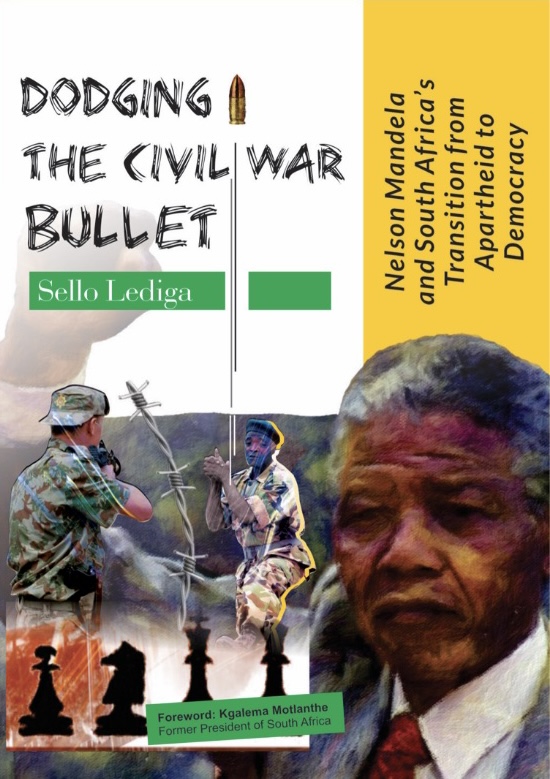
Sello Lediga is a writer and historian who has published four books. His third book, Dodging the Civil War Bullet, chronicles the secret talks between the ANC and the South African government to end apartheid.