


In South Africa and across much of the African continent, cultural expectations of masculinity remain deeply ingrained in how men are raised, navigate relationships and understand their responsibilities to society.
Proverbs such as “Monna ke nku ha a lle” (A man is a sheep; he does not cry) in Sesotho, and “Indoda ayikhali, ikhalela ngaphakathi” (A man does not cry; he cries inside) in isiZulu, reflect traditional expectations placed on men. While intended to encourage resilience, these expressions can also reinforce the perception that vulnerability is incompatible with manhood.
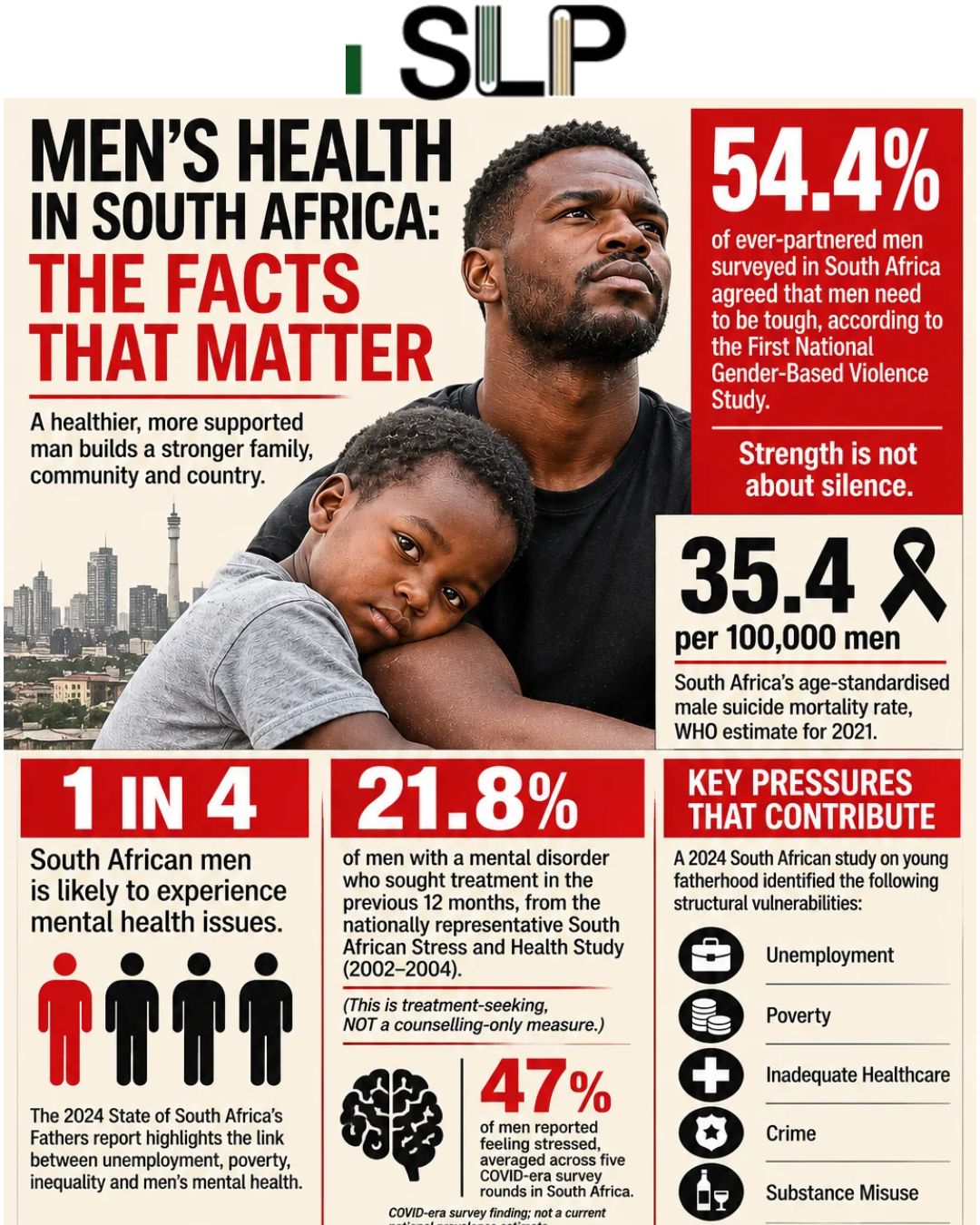
For generations, many men have been taught that strength means silence, emotional restraint and enduring personal struggles privately. Yet beneath these expectations lies a reality that deserves greater attention: men face significant physical, emotional and psychological health challenges, often compounded by stigma, social pressure and reluctance to seek help.
This International Men’s Day, the conversation must move beyond celebrating men for how much they endure. It must also recognise the importance of creating environments where they can speak, seek support, heal and thrive.
1. The Cost of Silence: Understanding Men’s Mental and Physical Health
Men face disproportionate risks in several areas of health and safety, including homicide, suicide and certain occupational injuries. Globally, suicide remains a significant public health concern, with the World Health Organization estimating that approximately 727,000 people died by suicide in 2021. Men account for a substantial proportion of these deaths in many countries.
In South Africa, men’s wellbeing is influenced by unemployment, economic insecurity, violence, social isolation, family responsibilities and deeply rooted expectations about what it means to be a provider.
The pressure to appear strong, financially stable and emotionally unaffected can leave men reluctant to acknowledge when they are struggling. For some, seeking psychological support may feel like an admission of failure.
Mental health challenges do not always manifest as visible sadness. They can present as irritability, withdrawal, anger, substance misuse, exhaustion or difficulty managing everyday responsibilities.
The same reluctance can affect physical health, with some men postponing medical appointments, ignoring symptoms or avoiding preventative screenings because of stigma, fear or the belief that they should simply push through discomfort.
But silence is not strength when it prevents someone from accessing the support they need. Encouraging men to prioritise their mental and physical health is not about diminishing their masculinity. It is about redefining strength to include self-awareness, responsibility and the courage to seek help.
2. International Men’s Day 2026: The Future Is Everyone
Observed annually on 19 November, International Men’s Day provides an opportunity to celebrate the positive contributions men make to families, communities and society, while drawing attention to the challenges affecting their wellbeing.
The 2026 theme, “The Future Is Everyone,” speaks to the importance of building a society in which men and boys are included in conversations about wellbeing, equality, inclusion and social progress.
The future cannot be built by one gender in isolation. It requires the collective participation, care, leadership and contribution of men and women.
Recognising men’s challenges does not diminish the struggles of women or undermine gender equality. Instead, it acknowledges that healthier individuals contribute to healthier families, stronger communities and more inclusive societies.
When men are encouraged to become emotionally intelligent, compassionate, accountable and self-aware, the benefits extend beyond their individual lives. These qualities influence how they parent, lead, communicate with partners, treat colleagues and engage with their communities.
A society that encourages men to thrive is a society that creates better conditions for everyone.
3. Could Reading Help Men Become Healthier Members of Society?
Reading is often associated with academic achievement, professional advancement or entertainment. However, its benefits extend well beyond acquiring information.
Books offer opportunities to encounter unfamiliar perspectives, examine personal beliefs, develop empathy and engage with complex human experiences. Through fiction, biographies, history, philosophy and personal development literature, readers can explore questions about identity, purpose, relationships, leadership and responsibility.
Reading can also provide a language for experiences that are difficult to articulate.
A man who struggles to express grief, anxiety, disappointment or uncertainty may encounter these emotions through a character’s journey or an author’s reflections. Literature can create opportunities for personal reflection without immediate disclosure or judgement.
Although reading cannot replace therapy, medical care or meaningful social support, it can complement personal development by encouraging curiosity, introspection and a willingness to engage with difficult questions.
4. The Benefits of Reading for Men: Five Ways Books Promote Personal Growth and Wellbeing
Reading should not simply be viewed as an academic exercise or leisure activity. It can contribute to personal development, helping men broaden their perspectives, develop emotional awareness and navigate everyday challenges.
Here are five important benefits of reading for men:
-
Develops Emotional Intelligence and Empathy
Reading, particularly literary fiction and narrative nonfiction, exposes readers to different experiences, motivations and perspectives.
By following characters through conflict, uncertainty, loss and personal growth, readers are encouraged to consider how others think and feel.
This ability to understand different perspectives can influence how men manage conflict, communicate with loved ones, build relationships and respond to the emotions of others.
-
Encourages Self-Reflection and Personal Growth
Books can challenge long-held assumptions about masculinity, success, leadership and personal responsibility.
Biographies, philosophy and personal development literature introduce alternative ways of thinking about life’s challenges. They encourage men to reflect on their experiences, examine their values and consider opportunities for personal growth.
-
Promotes Awareness of Mental Health
Books about psychology, emotional wellbeing and human behaviour can help men better understand experiences they may previously have struggled to articulate.
Reading about stress, anxiety, grief and relationships can encourage greater awareness and help reduce the stigma surrounding mental health. It can also make conversations about seeking professional support more accessible.
-
Strengthens Relationships and Communication
Exposure to different ideas and experiences can help men become more thoughtful communicators and better listeners.
Books can also provide common ground for conversations between parents and children, partners, friends and colleagues, strengthening relationships through shared learning and understanding.
-
Expands Knowledge and Leadership Skills
Books expose readers to new ideas, historical experiences, leadership philosophies and approaches to problem-solving.
For men navigating professional and personal responsibilities, reading can support critical thinking, informed decision-making, communication and a broader understanding of social issues.
Ultimately, reading encourages lifelong learning and the ability to adapt to an increasingly complex world.
5. Books as a Catalyst for Conversations About Men’s Wellbeing
One of the most valuable contributions books can make to men’s wellbeing is their ability to open conversations.
For many men, discussing personal challenges directly may feel uncomfortable. However, a book, article, poem or character can provide an accessible starting point.
A conversation about a character’s decisions may lead to reflections on relationships. A biography may prompt discussions about fatherhood, ambition or failure. A book about mental health may help someone recognise experiences they previously struggled to understand.
Reading clubs, book discussions and literary communities also create opportunities for connection. In a society where loneliness and social isolation affect wellbeing, shared intellectual and cultural experiences can strengthen relationships and build a sense of belonging.
Books do not necessarily provide all the answers. Sometimes, their greatest value lies in helping us ask better questions.
6. Redefining Masculinity: Strength Should Include Vulnerability
The challenge facing society is not to discard every cultural value associated with masculinity, but to question those that prevent men from living healthy, fulfilling and emotionally connected lives.
Resilience remains valuable. Responsibility matters. Courage, discipline, integrity and perseverance are qualities worth cultivating.
But these qualities should not require emotional suppression, neglect of personal health or an inability to ask for assistance.
A man can be courageous and vulnerable. He can be a provider and still need support. He can be a leader and admit uncertainty. He can protect his family while prioritising his own wellbeing.
These are not contradictions. They are expressions of a more complete understanding of humanity.
7. The Future Begins With What We Choose to Learn
International Men’s Day is an invitation to celebrate men, acknowledge their challenges and encourage meaningful change.
As we reflect on this year’s theme, The Future Is Everyone, let us consider the role that knowledge, education, storytelling and reading can play in shaping healthier men and stronger communities.
Let us encourage the men in our lives to take their health seriously, speak when they are struggling, seek support when they need it and remain curious about the world around them.
Let us also encourage them to read — not simply to acquire knowledge, but to broaden their perspectives, strengthen their emotional understanding and discover new ways of navigating life.
Because a man who is willing to learn, reflect and grow is not abandoning his strength. He is investing in it.
And perhaps the most important lesson we can share this International Men’s Day is this: being a man should never mean having to face everything alone.
The future is everyone. And it begins with the willingness to understand ourselves, one conversation, one page and one life at a time.
